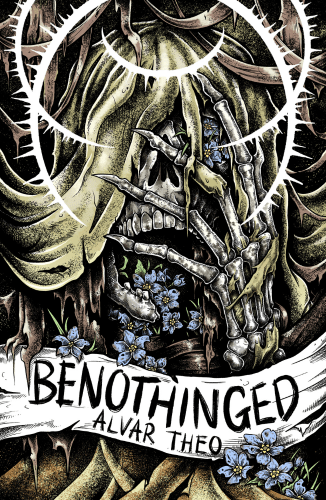
It’s refreshing to hear authors from across the pond (or anywhere in the world for that matter) discuss their beliefs around mental health ideologies, not because I expect a positive report–in fact, I expect the worst–but because the greater the collective number of histories we have in our arsenal, the likelier it is that at some point, down the road, one of us will be listened to. Their experiences are oftentimes grim ones, met with lack of support, access, or cultural sensitivity, and I compare it to America’s and sit back, glassy-eyed. I’m past emotional displays at this point, so far past tears or confronting the internet for answers that it’s terrifying. This doesn’t mean I’ve thrown hope away, exactly, but it’s sitting up, soft and fragile, on top of the shelf, safe from the stove, and the lights are shut off. They’ll remain shut off until I have a better idea of how to proceed, take the 17 years of anger I feel nearly every day regarding this lacking and figure some new approach towards advocacy. In the meantime, I’ll continue interviewing authors like Alvar Theo, author of Benothinged, a novel about metaphors: dark, funny, and resonant with the sharp, British wit we Americans are hard-wired to love. I beg you to take a minute and read Alvar’s interview. It’s understated and filled with a quiet empathy that had me resting my chin in my palm and wishing we could be friends.
What’s it been like for you these last several months? Feel free to share your publication journey, discuss the amount of labor it took in regards to your project’s editing process, the delirious nature of third drafts, or that one late night you spent staring into a glass of wine, wondering if it’d ever truly come together.
I was not in a good place when the offer for Benothinged came through so it wasn’t just great news it was also an enormous relief. Having something to focus on when I was out of work, physically unwell and not hopeful about the future was extremely helpful. There’s a popular (and sometimes relatable) joke about writers hating the act of writing but I do actually love it. It’s such a huge boost getting into the flow and seeing something coming together. Not that editing/rewriting was always fun – there’s a lot of room for self-doubt. There’s also a lot of waiting around for the next part of the process or for the publication date. That’s when your negative thoughts have time to run free. There’s a particular conversation between Mask and V that I kept remembering as cringeworthy, then I’d go back and read it and really like it. You have to know when to trust your internal editor and when to recognise that you’re just winding yourself up.
When Benothinged was published, there was a bit of a feeling of unreality about it. When I was younger, I’d always think about my life being completely different once I was a published author, but I was still just walking around, living my normal, daily life. Because my publishers are based in Scotland, I went to Edinburgh for the book launch. That was one of the best experiences in my life. It’s a wonderful city and visiting book stores there was a lot of fun. I got to speak to so many people about my writing, which I almost never get a chance to do. I wouldn’t call it imposter syndrome, but the fact that people were treating me like an actual author felt like I was getting away with something.
Share freely any publication news you may have, and please include any links you’d like us to include.
I am just getting back into writing after a period where my health took a turn for the worse. I am quite deep into a second novel (not related to Benothinged, although it deals with a lot of similar themes). I am hoping to have some shareable news about that in the near future.
In two sentences, would you summarize your novel for us?
Benothinged is about a monster preying on the isolated, lonely and desperate people in society. It’s about how, when you have no one and nothing else, you still have yourself.
You’ve mentioned in correspondence that mental health is featured throughout your novel. Was this something that you came into your project knowing you wanted to discuss? If so, did you set any parameters in place for yourself around how you wanted to approach this sensitive subject?
“The story doesn’t really work without discussing mental health.”
The monster preys on the isolated, and mental health is both a cause and result of isolation. We meet several victims over the course of the novel and I wanted their decisions to ‘give up’ to feel realistic. As for Mask, I wanted them to be a living, breathing, fully-formed person with mental illness. I wanted to write about what that is like on a day-to-day basis: the things you miss out on, the things that go neglected, how small things that other people take for granted feel like an enormous struggle, how sometimes spite is all that keeps you going.
One issue I was conscious of in terms of sensitivity was Mask’s mother. She clearly had her own mental health problems that made her a terrible parent. I tried to walk the line of making her feel like a real person, rather than this monstrous figure from Mask’s childhood, whilst not being dismissive of the impact her behaviour had on Mask for the rest of their life.
What is something you’d like readers to take away from your work in regard to mental health advocacy, discussion, or criticism?
“It’s a fact that mental health services in this country are terrible and likely to get worse in the near future. My own experiences with them have been frustrating to say the least.”
Every day we wake up to a new terrible announcement from the UK government. It’s a difficult environment in which to take care of your own mental health. In terms of criticisms, it does bother me whenever there are half-hearted government campaigns about chatting to your mates or seeking help when they are slashing services and targeting the most vulnerable groups in the country with apparent glee.
I also want to reiterate that mental illness is never a moral failing. It’s something beyond the person’s control and it’s abhorrent to imply otherwise.
Anything else you’d like to share or for us to share on your behalf?
Kinda separate, but related to the mental health issue, is the idea that an individual matters because they matter to other people. It’s a nice thought that someone would be missed by others, but I’ve always found that dismissive, like: keep your feelings to yourself so you don’t upset the people who love you. Also, sometimes a person genuinely has no one. They still matter despite that. This ties into things like amatonormativity, and how that leaves individuals like Mask behind. These are issues I like to get into with my work.
Drop any social media or website links you’d like us to link to in the interview.
The only social media I’m active on atm is Bluesky:
This is the direct link to purchase Benothinged from Haunt:
 Her Ghosts